Conventional fire alarm panels
Identify the alarm zone and coordinate warning across a straightforward fire alarm installation.
Discuss your needs on WhatsApp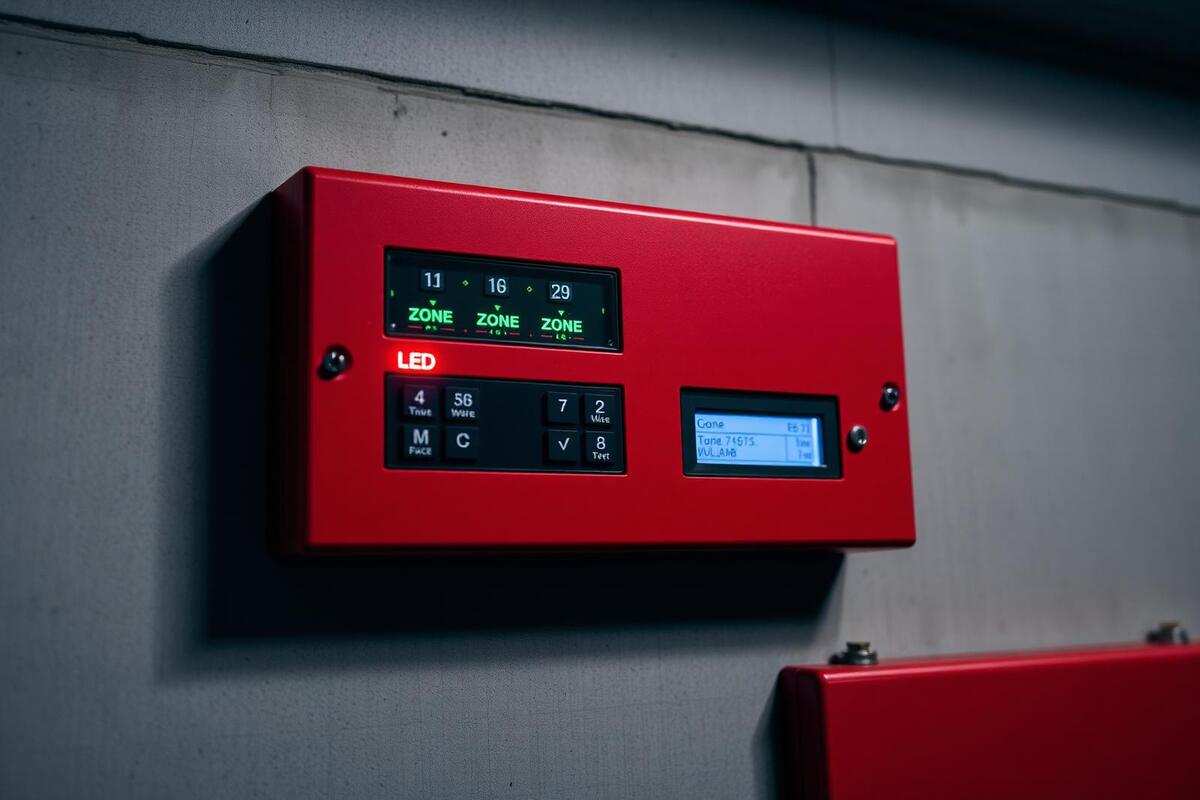
What is it used for?
Detectors and manual call points are grouped into zones. When a device activates, the panel indicates its zone; staff then locate the device within that area. The panel also supervises relevant circuits and power faults.
- Premises with a simple layout and a manageable number of zones
- Compatible upgrades to an existing conventional installation
What does it offer?
- Clear zone indication and straightforward operation
Types and key differences
- Conventional
- Reports the affected zone.
- Addressable
- Reports an individually identified device; useful when precise location and diagnostics matter.
What needs checking before selection?
- A zone indication is not the exact detector location. Selection must consider the response needed, not cost alone.
Components and scope
- Control panel and backup power
- Compatible detectors, call points and notification circuits
- Zone labelling and commissioning records
From survey to handover
- Survey the building and identify the hazard.
- Select compatible equipment and prepare the project design for the required review.
- Install, test and document the work; hand over operating information and a maintenance plan.
In Saudi Arabia, the design is reviewed against applicable Saudi Building Code requirements, including SBC 801, and the competent authority’s requirements. Capacity, quantities, coverage and testing follow the project design and manufacturer instructions. Safety licensing remains subject to the authority’s process through Salamah.
Technical and regulatory references
Technology references, not evidence of a model’s approval or a commercial partnership. Content reviewed: 20 September 2026.
Is it right for your building?
Share your building use, location or photos of the existing system so we can discuss the next step.
Discuss your needs on WhatsApp